Start at the controls.
The experience starts inside the real AT-38B cockpit. You sit in the aircraft while the flight takes place in simulation.
Explore the work behind the build TIGER 5AIRCRAFT / SIMULATION
Tiger 5 / The simulator
A purpose-built simulator inside a Northrop AT-38B Airframe. Currently under construction.
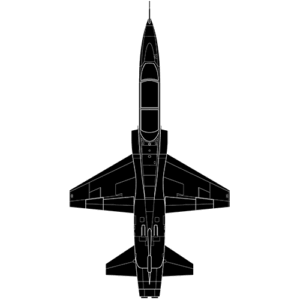
Concept diagram, not to scale. Projector positions and screen shape are illustrative; final equipment is not confirmed.
The experience starts inside the real AT-38B cockpit. You sit in the aircraft while the flight takes place in simulation.
Explore the work behind the buildProjector-based visuals are planned to create the outside view for simulated flight. Projector count, screen shape and equipment positions are not yet confirmed.
The proposed command and control combines ATLAS mapping with mirrors of the simulated outside view. It is a supporting part of the design concept, alongside the cockpit and projection environment.
Explore the proposed command and control ↗From moving the airframe to connecting its physical inputs to the digital world.
The AT-38B had to be moved as a complete Airframe before the simulator project could take shape. These photographs record the aircraft on its transport trailer and beside the transport vehicle, showing the scale of the move behind the project.
The aircraft’s transport is part of the Tiger 5 project story.
Inputs made in the Airframe can now translate into digital inputs for simulation. That connection is a central step in bringing 0859 into its new role: making interaction with the physical cockpit part of the simulated experience.
The physical-to-digital connection is working. The complete simulator remains under construction.
Work has been carried out on the seats as part of the simulator project. This photo set records the seat assemblies, harnesses, upholstery, and surrounding structure in the workshop.
The photographs document the equipment. The detailed work record is still being assembled.
The oxygen system is one of the aircraft systems the team has worked on during the conversion. It is recorded here as its own workstream within the broader cockpit project.
Technical scope and photographs specific to this system will be added when available.
Work has also been carried out on the aircraft’s anti-G system. This entry keeps that work visible as a distinct part of the conversion, alongside the seats and oxygen system.
Technical scope and photographs specific to this system will be added when available.
The project has included work on the control surfaces as well as the cockpit itself. This entry records that physical aircraft work within the simulator conversion.
The specific surfaces, modifications, and test results are to be documented.
The rudders and control uprights are among the areas worked on by the team. They are included here separately so this part of the project can have its own photographs and technical account.
Detailed modifications and integration status are to be documented.
Work on the grips forms part of the cockpit-control workstream. The project’s confirmed physical-to-digital progress is described above; this entry will document the grip-specific work as those details become available.
Individual grip functions and their digital mappings have not yet been documented here.
The throttles are another confirmed area of work in the aircraft. They have their own place in this build record, alongside the grips and other cockpit inputs.
The detailed work, digital mappings, and test results are to be documented.
The team has carried out work on the avionics as part of the conversion. This entry provides a place to document the specific equipment and its place in the simulator as the technical record develops.
Equipment details, modifications, and integration status are to be documented.
The canopy is included in the aircraft work undertaken for the project. Its work record will sit alongside the cockpit and airframe entries, rather than being lost within a general overview of the build.
The specific canopy work and supporting photographs are to be documented.
Work has been carried out on the landing gear as part of the aircraft project. This is recorded as a separate workstream so its physical work and any simulator-related integration can be explained accurately.
The scope of the work and any simulator integration are to be documented.
An evolving record of the conversion. Work areas are confirmed by the project team; technical notes and system-specific photographs are being collected.